Why Hallstatt Remains Europe’s Most Picturesque Lakeside Village
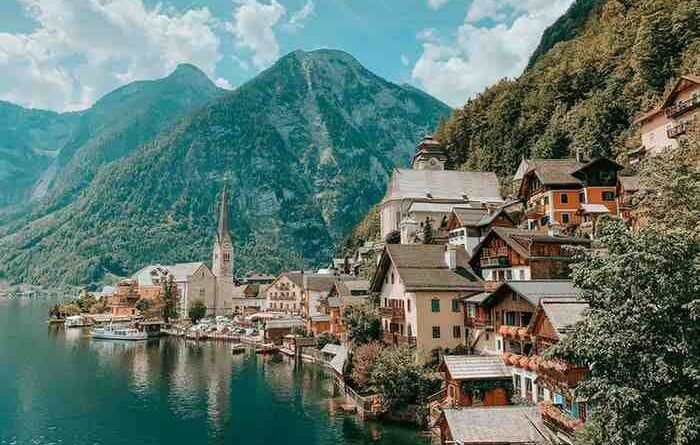
Hallstatt, a tiny Austrian village set along the serene Hallstätter See, is often described as the most picturesque lakeside town in Europe, and it takes only a single glance to understand why. Colorful alpine houses reflect perfectly in the glassy lake, dramatic mountain cliffs rise almost vertically behind the village, and a peaceful silence hangs in the air that feels centuries away from modern life.
Despite its small size, Hallstatt has a remarkably deep cultural and historical presence, dating back more than 7,000 years. In fact, the entire region is recognized as a UNESCO World Heritage Site because of its ancient salt mines, archaeological discoveries, and its role as one of the earliest known centers of European civilization.
Salt mining shaped Hallstatt’s identity, and visitors can still tour the world’s oldest salt mine by riding a wooden slide into the mountain and exploring tunnels carved long before the Roman Empire existed. Standing inside a cavern filled with shimmering salt walls, it becomes clear why this mineral once made Hallstatt one of the wealthiest communities in early Europe.
The village itself is equally captivating. Narrow lanes wind between centuries-old homes built snugly against the mountainside, and each turn reveals flower-covered balconies, lakeside cafés, and quiet spots where visitors can sit and watch swans glide across the water.
The iconic Evangelical Church, with its pointed spire rising above the shoreline, has become the defining image of Hallstatt and is photographed by travelers from every corner of the world. Nearby, the Catholic Church houses the eerily fascinating Bone House, where artistically decorated skulls offer a glimpse into the region’s historical burial customs. Though unusual, it remains one of Hallstatt’s most distinctive cultural landmarks.
For nature lovers, Hallstatt serves as the perfect gateway into the Dachstein Alps. Hiking trails lead to panoramic viewpoints such as the Skywalk, suspended high above the village and offering a dramatic perspective of the lake below. Boat rides across the water provide a tranquil escape and an opportunity to see the village from its most photogenic angle.
Seasons transform Hallstatt into entirely different worlds: summer brings wildflowers and shimmering blue reflections, autumn blankets the mountains in vibrant orange and red, winter turns the town into a snowy fairytale, and spring fills the region with fresh alpine breezes.
Despite its global popularity, Hallstatt still maintains a gentle rhythm. Early mornings are particularly magical, with mist hanging above the lake and the only sound coming from distant church bells or quietly paddling boats. The village invites slow travel—wandering with no destination, sipping hot chocolate by the water, or simply sitting on a wooden bench and letting the calmness seep in.
Hallstatt’s charm is not just visual; it is emotional. Many travelers describe a sense of peaceful nostalgia as if stepping into a painting they once imagined. Its beauty feels timeless, and even with growing tourist numbers, the village has preserved the authenticity that has defined it for centuries. Hallstatt remains a reminder of how harmoniously nature and human life can coexist, and why some places stay etched in memory long after the journey ends.