Majuli: The World’s Largest River Island You Should Visit Before It Disappears
Majuli, tucked quietly within the mighty Brahmaputra River in Assam, is one of India’s most extraordinary travel destinations—yet still remains surprisingly underrated. Recognized as the world’s largest inhabited river island, Majuli blends natural beauty, cultural heritage, and ecological uniqueness in a way few destinations can match. But here’s the twist: climate change and constant soil erosion threaten its very existence, making it a place to visit sooner rather than later.
What makes Majuli exceptional is its deep-rooted connection with Assamese culture. The island is the spiritual heart of the Neo-Vaishnavite movement founded by the saint Srimanta Sankardev in the 15th century. Even today, its traditional “satras” (monasteries) preserve ancient dance forms, music, literature, and crafts. A visit to Majuli feels like stepping into a living museum where centuries-old traditions thrive in everyday life. For travelers seeking authentic cultural experiences, this island offers more than just scenic views—it offers an immersion.
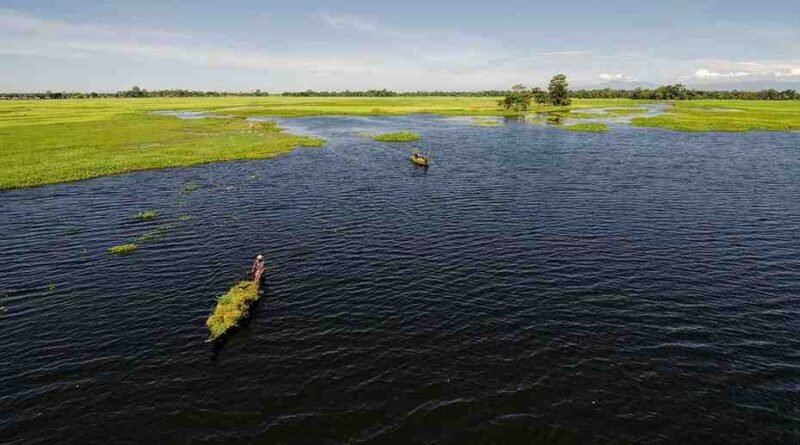
Majuli’s landscape is equally captivating. With lush green rice fields, narrow village paths lined with bamboo houses, and migratory birds swooping across the wetlands, the island looks straight out of a watercolor painting. During winter, species such as the Greater Adjutant and Purple Heron make Majuli a paradise for bird watchers. The island’s biodiversity is so rich that it has been proposed as a UNESCO World Heritage Site, reflecting its global ecological importance.
What truly sets Majuli apart, however, is its sustainable lifestyle. Most communities here still rely on age-old techniques for fishing, farming, and crafting. The famed “mask-making village” of Chamaguri is a must-visit, where artisans create elaborate masks used in traditional Bhaona performances. Their skill and precision offer a rare insight into indigenous craftsmanship that has survived for centuries.
Reaching Majuli itself is an adventure. Visitors typically travel from Jorhat, crossing the Brahmaputra on a ferry—an experience that adds to the island’s charm. The journey across the river, surrounded by vast expanses of water and golden sunsets, feels meditative. And once you arrive, the slow, simple pace of life makes Majuli a perfect escape from urban chaos.
However, the island faces a pressing threat. Scientists and environmentalists have repeatedly warned that Majuli is shrinking dramatically due to erosion caused by the Brahmaputra’s shifting currents. From an area of around 1,200 square kilometers in the early 20th century, it has reduced to less than 500 square kilometers today. Conservation efforts are underway, but the future remains uncertain. Visiting Majuli is not just tourism—it is witnessing a rare cultural and ecological wonder that may not look the same in a few decades.
For travelers, Majuli offers a blend of serenity, adventure, and heritage. Whether you’re cycling through peaceful villages, watching the sunrise over the river, or attending a traditional dance performance inside a s at ra, Majuli offers moments that stay with you long after the trip ends. It’s a destination that reminds you that travel is not just about seeing places—it’s about understanding the fragile beauty of the world.